For a cattle farmer, the Punjab Livestock Card Phase II is not just a loan. It is a full package: Rs 27,000 per animal in interest-free credit, free animal tagging, free vaccination against foot-and-mouth disease, cash access through ATMs, and a direct link to meat exporters. Launched on 14 October 2026 with Rs 16.2 billion in financing over two years, the second phase is built for farmers who want healthier animals, steadier milk and a better price at sale time.
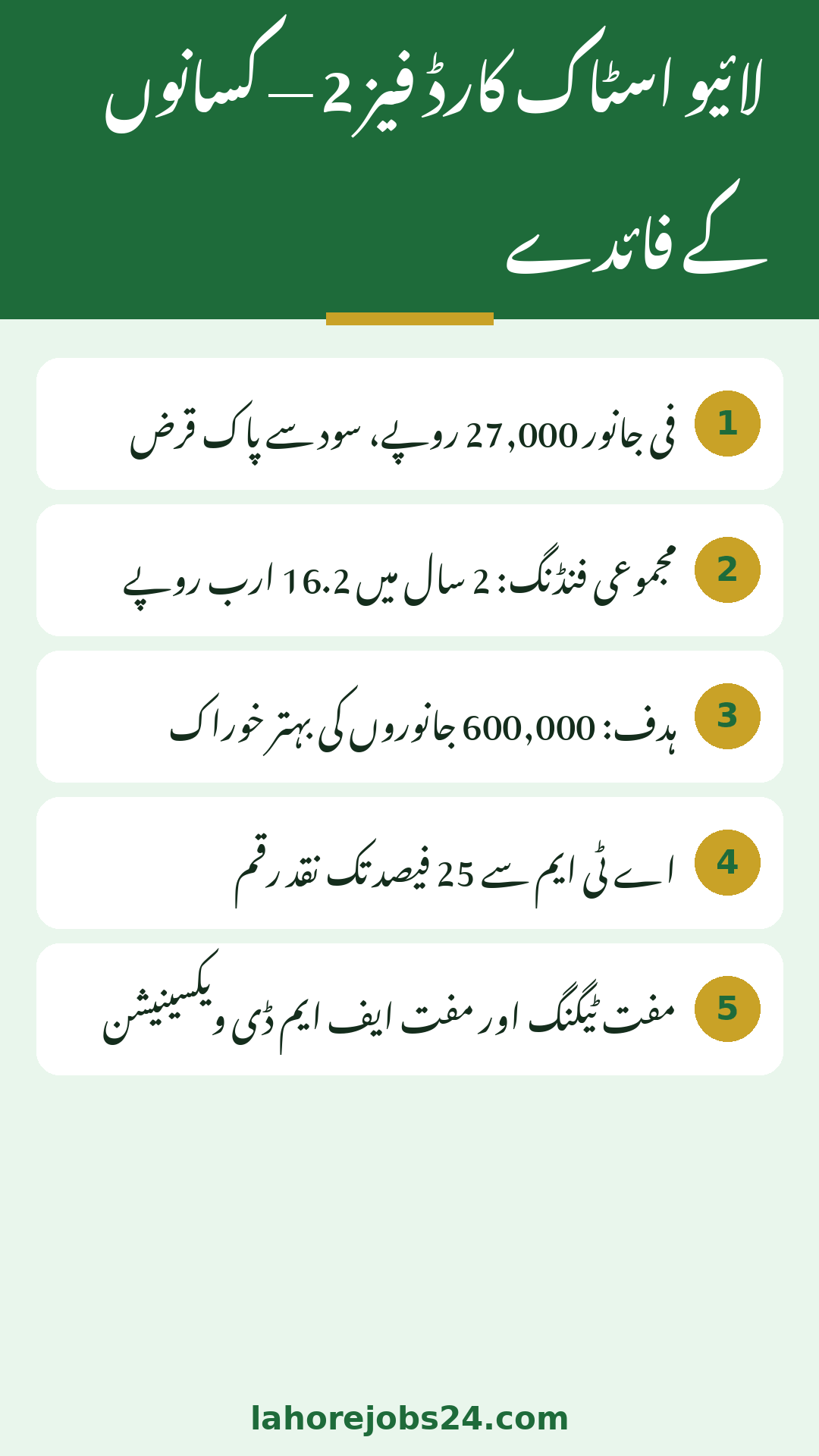
The core benefit is straightforward. Every eligible farmer receives Rs 27,000 per animal in interest-free credit to buy wanda, silage, mineral mixtures and other approved supplies. The government pays the interest, so you repay only the principal, and the financing target for the phase is Rs 16.2 billion over two years, aimed at improving the nutrition of 600,000 animals across the province. That scale matters: Phase I covered 400,000 animals, so Phase II is a major expansion, not a repeat.
Good nutrition is not an abstract goal. A well-fed animal gives more milk, holds its condition through the dry season, and fetches a better price when sold. Phase I spending proves the money was used for its real purpose: farmers spent Rs 892.6 million on animal feed, Rs 87 million on silage and Rs 20 million on mineral mixtures. The card is designed to keep that spending on feed and care, which is why most of the credit is tied to registered dealers rather than handed over as cash.
2. Livestock Card ATM Cash: Up to 25 Percent in Hand
Not every livestock expense happens at a registered dealer, and the scheme recognises that. Farmers can withdraw up to 25 percent of their interest-free loan in cash through ATMs. That cash portion covers the small, urgent costs that keep a herd running: transport, a local purchase, or an emergency need that cannot wait for a dealer visit.
Cash limit: up to 25 percent of your loan amount through ATMs.
Main spending: the rest through the card at registered dealers for feed and supplies.
Discipline: cash is part of the same loan, so it must be repaid like the rest.
Planning: keep cash for genuine needs, not routine purchases a dealer can supply.
Record: keep ATM slips with your card record so your account stays clear.
Use the cash wisely and the dealer credit stays focused on nutrition, which is where the real return comes from. A farmer who spends the whole loan as cash loses the scheme’s main advantage: structured spending on the feed that raises milk yield and animal value.
3. Livestock Card Free Tagging: Why Every Animal Gets a Tag
Phase II gives every participating farmer free animal tagging, and tagging is more useful than it sounds. A tag gives each animal a permanent identity in the system, which links the animal to its vaccination record, its owner and its loan. That identity protects you in three ways: it proves ownership if an animal is disputed, it tracks vaccination so no animal is missed or double-dosed, and it connects your herd to the wider livestock system, including export channels that demand traceability.
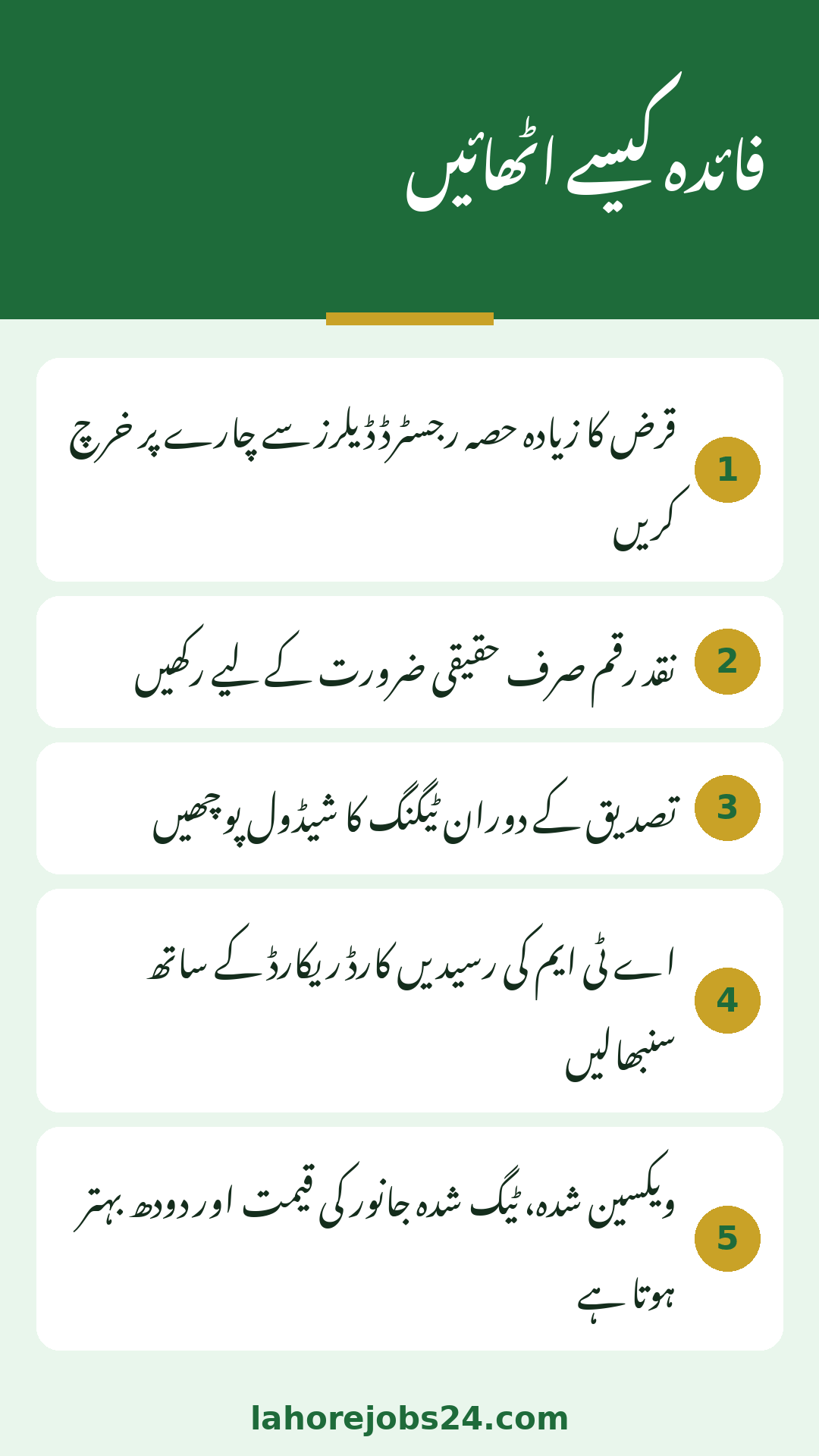
During verification, ask the team about tagging so it is scheduled with your approval, alongside vaccination. A tagged, vaccinated herd is easier to manage, easier to sell, and easier to insure in practical terms, because every animal’s history is visible. For small farmers, who often keep records in memory, tagging is the first step toward a herd that can be counted, valued and traded on its record rather than on a buyer’s guess.
4. Livestock Card FMD Vaccination: Free Protection for Your Herd
Foot-and-mouth disease is the nightmare of every cattle farmer, because it spreads fast through a herd, crashes milk yield, cuts animal value sharply and leaves treatment bills piling up. Phase II answers it directly with free anti-FMD vaccination for participating animals. Prevention costs you nothing under the scheme, while an outbreak can cost a season’s income.
Disease spreads fast in an unvaccinated herd.
Milk yield crashes during and after an outbreak.
Animal market value falls sharply when disease is known.
Treatment bills pile up, often exceeding the cost of prevention many times over.
Free vaccination protects the herd, keeps production steady and preserves market value.
Ask for vaccination during verification, and keep the vaccination record with your card documents. A vaccinated herd is also more attractive to buyers and exporters, who need disease-free animals for their own markets. That link between a free jab and a better sale price is one of the scheme’s quietest benefits.
The card is your entry into a connected system, not just a loan. The Livestock Connect Portal now links 23,000 farmers directly with meat exporters, and the province has signed memorandums with exporters for markets in China, Saudi Arabia, Gulf countries, Azerbaijan, Uzbekistan and Europe. According to the launch briefing, Punjab’s meat exports rose by 96 million dollars in one year, and animal exports grew by 43 percent.
The rise in women farmers, from 90 to 1,107, deserves special mention. Livestock work in Punjab has always involved women, but registration in their own names, with their own cards, turns that work into recognised, bankable farming. If you are a woman livestock farmer, register in your own name and keep your own card record, because the scheme’s benefits follow the registered farmer.
6. Livestock Card How to Claim: Registration, Card and Helpline
Claiming the full package starts with one registration. Send PLC and your CNIC to 8070, register on the official portal, or visit your Civil Veterinary Hospital. Phase I cardholders do not even need a new card for Phase II; their existing cards continue. Approved farmers collect the card from one of the Bank of Punjab’s 131 branches across the province, and once you have it, it is your standing facility for the scheme.
Register free by SMS, portal or veterinary hospital visit.
Ask for tagging and vaccination during verification.
Collect your card from Bank of Punjab with your CNIC.
Phase I cards continue into Phase II; no new card is needed.
Call the toll-free helpline on 0800-09211, available 24 hours a day, for guidance at any time.
No confirmed last date has been announced for Phase II registration in the launch reports, so do not trust a viral deadline, and do not pay anyone who promises to register you faster. Registration is free, the card is collected from the bank, and the helpline is the place to check any claim you hear elsewhere. A facility built for repeat use, not one season, rewards farmers who register properly, use the feed credit on nutrition, and repay on time, as 96 percent of Phase I farmers did.
For official information and registration, visit plc.punjab.gov.pk, or call the toll-free helpline on 0800-09211.
Conclusion
Punjab Livestock Card Phase II gives cattle farmers far more than a loan: Rs 27,000 per animal in interest-free feed credit, up to 25 percent in ATM cash, free tagging, free FMD vaccination, and a direct link to meat exporters, all within a Rs 16.2 billion programme for 600,000 animals. The farmers who gain most will be those who use the feed credit on nutrition, take the free tagging and vaccination during verification, and repay on time like the 96 percent who did so in Phase I. Register free, collect your card, and turn the package into healthier animals, steadier milk and a better price.
How much do I get per animal under Livestock Card Phase II?
Eligible farmers receive Rs 27,000 per animal in interest-free credit for feed, silage, mineral mixtures and other approved supplies. The government pays the interest.
Is animal tagging and vaccination really free?
Yes. Phase II provides free animal tagging and free vaccination against foot-and-mouth disease for participating animals, as announced at the 14 October 2026 launch.
How much cash can I withdraw from the Livestock Card?
Up to 25 percent of your interest-free loan can be withdrawn in cash through ATMs. The rest is spent through the card at registered dealers.
How do I register for Livestock Card Phase II?
Send PLC and your CNIC to 8070, register on the official portal, or visit your Civil Veterinary Hospital. Registration is free, and Phase I cardholders keep their existing cards.
Is there a last date for Livestock Card Phase II registration?
No confirmed last date has been announced in the launch reports. Do not trust viral deadlines, and confirm current requirements through the official portal or helpline.
Where do I collect my Livestock Card?
Approved farmers collect the card from a Bank of Punjab branch, of which there are 131 across Punjab, with your CNIC. The toll-free helpline is 0800-09211.
Shahzad Sahil is the editor of lahorejobs24.com, covering government jobs, private jobs, bank jobs, results and education news for Lahore and Punjab, with information verified from official sources.